The airline industry is no stranger to consolidation, but when United Airlines CEO Scott Kirby confirmed he personally approached American Airlines about a merger, it sent shockwaves through aviation and financial markets alike. This isn’t speculation or rumor—it’s a direct admission from one of the most influential leaders in commercial aviation.
What makes this revelation particularly significant is not just the scale of the proposed union—two of the four largest U.S. carriers discussing consolidation—but also the timing. With airlines still recovering from pandemic disruptions, facing labor shortages, and navigating volatile fuel costs, the idea of a mega-merger raises urgent questions about competition, pricing, and the future of air travel.
Kirby didn’t mince words. In a candid interview, he stated he reached out to American’s leadership to explore a strategic combination. While American swiftly rejected the overture, the mere fact that the conversation happened underscores deeper pressures shaping the industry.
Let’s unpack what this means—for airlines, travelers, regulators, and the broader U.S. aviation landscape.
Why United Wanted a Merger
At its core, the push for a merger reflects a strategic calculus: scale equals resilience. United operates an extensive global network, but American holds dominant positions in key domestic hubs like Dallas/Fort Worth, Charlotte, and Philadelphia. A union would create a carrier with unmatched route coverage, airport slots, and operational leverage.
But this isn’t just about geography. Consider the economics:
- Cost synergies: Mergers can eliminate redundant routes, consolidate back-office functions, and streamline fleet management. United and American together could save billions annually.
- Labor negotiations: With both airlines renegotiating pilot and union contracts, a combined entity would wield greater influence in labor talks.
- International reach: While United leads in transpacific routes, American has stronger Latin American and transatlantic presences. Together, they’d challenge Delta and global alliances more effectively.
Kirby has long advocated for rational industry growth. In his view, too many domestic carriers chasing limited demand leads to price wars, capacity mismanagement, and unsustainable profits. A merger with American would reduce internal competition and allow for more disciplined network planning.
Still, the move was as much defensive as it was ambitious. With Delta investing heavily in premium products and jetBlue pushing into transatlantic markets, United needed to secure its long-term positioning.
American’s Rejection and Internal Resistance
American Airlines didn’t just decline the proposal—they rejected it outright. CEO Robert Isom called the idea “not in the best interest of our customers, our employees, or our shareholders.” But that statement masks deeper tensions.
Internally, American has struggled with integration since its 2013 merger with US Airways. That deal, while ultimately successful, was plagued by labor unrest, IT system failures, and brand confusion. The memory of those challenges likely influenced leadership’s instinctive “no.”
Moreover, American’s board and major shareholders may see independence as key to their turnaround strategy. The airline has been reinventing itself with new aircraft, upgraded cabins, and route optimization. A merger now could derail that momentum.
There’s also a cultural mismatch. United has positioned itself as a tech-forward, globally focused airline with a strong international loyalty program. American, by contrast, remains more domestically oriented, with a legacy-heavy cost structure and a different operational ethos.
Even if synergies exist on paper, forcing these two organizations together could lead to executive infighting, system incompatibilities, and employee attrition—risks that may outweigh potential rewards.
Regulatory Hurdles Would Be Immense
Even if both airlines had agreed, the path to approval would be blocked by regulatory red tape. The U.S. Department of Justice (DOJ) has grown increasingly aggressive in blocking anti-competitive deals, especially in concentrated industries.
Consider the facts:

- United and American are two of the “Big Four” U.S. carriers, which collectively control over 80% of domestic capacity.
- A combined entity would dominate key markets: DFW, ORD, IAH, EWR, and LAX.
- The DOJ blocked the American-US Airways merger initially in 2013, only approving it after significant concessions, including slot divestitures.
Today’s antitrust environment is even less forgiving. Under the Biden administration, the DOJ has signaled a tougher stance on monopolistic behavior. A merger of this size would face immediate legal challenges.
Experts predict any approval would require massive asset sales—potentially including entire hubs—to satisfy regulators. That could erode most of the proposed synergies, making the deal pointless.
And unlike past decades, there’s little political appetite for airline consolidation. Lawmakers from both parties have criticized rising fares and reduced competition, making a mega-merger a lightning rod for scrutiny.
What This Means for Travelers
Consumers should care deeply about consolidation in the airline industry. Fewer players often mean fewer choices, less competitive pricing, and reduced service quality—especially on non-competitive routes.
For example:
- A United-American merger could eliminate head-to-head competition on over 100 domestic routes.
- On transcontinental flights—like New York to Los Angeles—where both carriers offer multiple daily flights, a combined schedule might reduce frequency or eliminate premium options.
- Frequent flyers could see loyalty programs merged or devalued, a common outcome post-merger.
We’ve seen this movie before. After Delta-Northwest and United-Continental merged, service on overlapping routes often declined. Smaller cities lost direct flights as carriers optimized for profitability over connectivity.
The irony? Airlines argue consolidation leads to better service through efficiency. But data suggests otherwise. A 2022 study by the American Economic Association found that post-merger, ticket prices rose 5–10% on overlapping routes, with no measurable improvement in on-time performance or customer satisfaction.
Travelers in secondary markets—think Omaha, Spokane, or Greenville—would be most vulnerable. These cities rely on competitive pressure to maintain reasonable fares and flight options. Remove that pressure, and airlines can—and do—raise prices with little consequence.
Industry Reaction: Skepticism and Speculation
The aviation world reacted swiftly to Kirby’s revelation. Analysts were divided.
Some, like Dan McKenzie of Seaport Research, called the idea “logical from a shareholder value perspective,” citing potential cost savings and improved international competitiveness. Others, like Hunter Keeter of Bloomberg Intelligence, warned it would “invite regulatory disaster” and “alienate customers.”
Pilot unions were unequivocal in opposition. The Allied Pilots Association (APA), representing American’s pilots, issued a statement saying, “Now is not the time for risky consolidation that threatens jobs and operational stability.” The Air Line Pilots Association (ALPA), which represents United pilots, echoed those concerns.
Investors responded with caution. United’s stock dipped slightly, while American’s rose—suggesting markets viewed the rejection as protective of shareholder value.
But the most telling reaction came from Delta. While publicly neutral, Delta executives privately welcomed the news. A weaker United, distracted by failed merger talks, is less of a threat on key international routes.
JetBlue and Alaska Airlines also stand to benefit. Both have positioned themselves as customer-friendly alternatives to the legacy carriers. Any perception of the “Big Three” becoming more monopolistic could drive travelers toward these smaller, more agile competitors.
Why This Move Was Still Strategic
Even though the merger is dead—for now—Kirby’s gambit wasn’t a failure. In fact, it may have been a masterstroke of corporate positioning.
By going public with the attempt, United:
- Demonstrated ambition: It signaled to investors that leadership is thinking boldly about long-term growth.
- Put pressure on American: The rejection exposes American’s strategic insecurity. Are they confident in their standalone plan, or just fearful of change?
- Influenced public discourse: The conversation has shifted to industry consolidation, giving United a platform to shape the narrative on competition, pricing, and regulation.
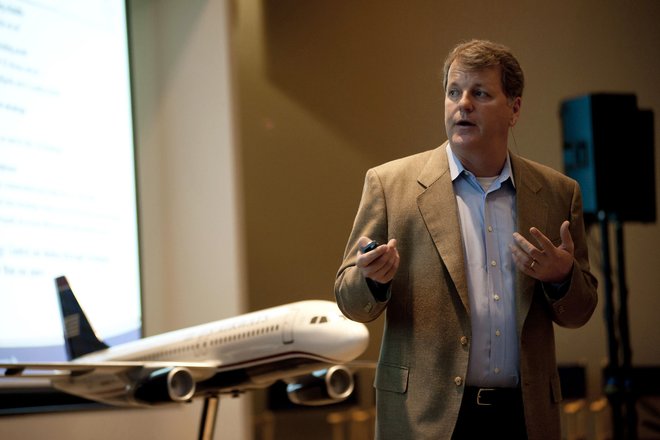
This is classic corporate chess. Kirby didn’t expect American to say yes immediately. But by forcing the conversation, he’s set the stage for future negotiations—whether with American, another carrier, or even regulatory bodies.
It also strengthens United’s hand in other areas. Labor unions now know the company is exploring all options, which could influence contract talks. Suppliers and partners may offer better terms to maintain stability.
In the world of corporate strategy, sometimes the threat of action is as powerful as the action itself.
What’s Next for United and American Neither airline is standing still.
United continues expanding its international footprint, adding new routes to India, Africa, and Southeast Asia. It’s also investing heavily in sustainable aviation fuel (SAF) and next-gen aircraft like the Boeing 787 and Airbus A350.
American, meanwhile, is focused on execution: improving on-time performance, upgrading its fleet with new A321s and 737 MAX jets, and enhancing customer experience through digital tools.
But the ghost of this merger talk will linger. Both airlines now know the other is open—however reluctantly—to transformational change.
Possible next moves:
- Asset swaps or codeshare expansions: Instead of full merger, the two could deepen commercial ties in specific regions.
- Third-party consolidation: Could United pivot toward a merger with Delta? Unlikely, but not impossible in a crisis. Or could American explore a tie-up with Alaska? More plausible, given their overlapping West Coast presence.
- Regulatory engagement: Both carriers may begin lobbying for clearer merger guidelines, hoping to shape future antitrust policy.
One thing is certain: the industry is at an inflection point. Economic pressures, climate mandates, and shifting traveler expectations will force airlines to adapt—through innovation, partnership, or consolidation.
The Bottom Line: Consolidation Is Inevitable—But Not This Way
Scott Kirby’s move confirms what many in aviation have suspected: the current U.S. airline structure is unstable. Four legacy carriers competing for finite demand is unsustainable in the long run.
Consolidation will happen—not tomorrow, but eventually. The question isn’t if, but how and when.
This attempt failed because it was premature, politically unviable, and operationally fraught. But it was also instructive. It revealed the contours of what a future merger might look like—and the barriers it must overcome.
For travelers, the takeaway is clear: demand transparency, support competition, and vote with your wallet. The health of the airline industry depends not just on corporate strategy, but on informed consumer choice.
For United and American, the path forward isn’t unity—it’s excellence. Prove that independence can deliver better value, service, and innovation. Because if they can’t, the pressure to merge won’t come from a CEO’s phone call—it’ll come from the market itself.
FAQs
Did American Airlines agree to the merger? No. American Airlines rejected the proposal, with CEO Robert Isom stating it was not in the best interest of customers, employees, or shareholders.
Who initiated the merger talks? United Airlines CEO Scott Kirby confirmed he personally approached American Airlines leadership about a potential merger.
Why did United want to merge with American? The goal was to achieve cost synergies, expand route networks, strengthen international presence, and improve competitive positioning against Delta and other carriers.
Would the merger have been approved by regulators? It’s highly unlikely. The U.S. Department of Justice has a strong track record of blocking airline mergers that reduce competition, especially among the largest carriers.
How would a merger affect airline ticket prices? Historical data shows that mergers often lead to higher fares on overlapping routes due to reduced competition, typically by 5–10%.
Could United try to merge with another airline? Possibly. While a Delta merger is unlikely, United could explore partnerships or consolidation with smaller carriers or regional players in the future.
What happens to frequent flyer programs in a merger? Loyalty programs are usually merged or aligned, often resulting in changes to reward values, redemption rules, and elite status requirements.
FAQ
What should you look for in United CEO Confirms Merger Talks with American Airlines? Focus on relevance, practical value, and how well the solution matches real user intent.
Is United CEO Confirms Merger Talks with American Airlines suitable for beginners? That depends on the workflow, but a clear step-by-step approach usually makes it easier to start.
How do you compare options around United CEO Confirms Merger Talks with American Airlines? Compare features, trust signals, limitations, pricing, and ease of implementation.
What mistakes should you avoid? Avoid generic choices, weak validation, and decisions based only on marketing claims.
What is the next best step? Shortlist the most relevant options, validate them quickly, and refine from real-world results.